Selling the Dream:
How the Entertainment Industry Weaponized Limerence

I recently stumbled onto the concept of limerence — and suddenly, a lot of things clicked.
Limerence is a state of involuntary obsession with another person. Unlike love or lust, it’s fueled by uncertainty — specifically, the desperate, consuming need to know whether the person you’re fixated on feels the same way about you. It feels less like love and more like addiction, with dopamine flooding your brain every time you get even a hint of reciprocation.
The entertainment industry didn’t discover this by accident. They’ve been engineering it for decades.
It started — at least visibly — with The Beatles.
Manufactured hysteria was critical to the marketing of The Beatles. Disc jockeys were blitzed with promo material, posters teased “The Beatles Are Coming,” and the deliberate buildup of tension made fan anticipation unbearable by the time the band arrived. Critics called it shameless manipulation and exploitation of children as consumers.
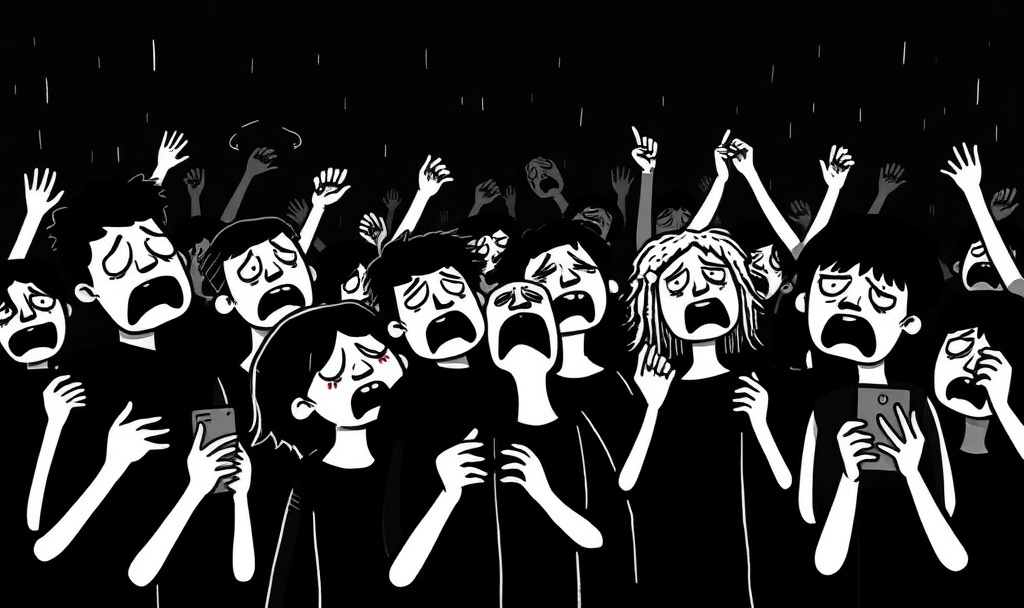
Images of screaming, weeping girls weren’t just captured — they were broadcast and amplified, used to convince other young people that they too should feel this overwhelming longing. The crying fan in the crowd wasn’t a byproduct. She was a marketing tool. The focused, emphatic fan practices set into motion around the Beatles became the blueprint for how bands, performers, and their fans would interact in the decades that followed — setting the stage for boy bands from the Monkees all the way to One Direction.
The formula hasn’t changed. It’s only gotten more precise.
The core engine is the tease — the suggestion of possible reciprocation that never quite arrives. That’s limerence in a bottle. Events like fan signs, brief meet-and-greets, and VIP passes are standard and highly lucrative revenue streams. These interactions reinforce the illusion that fans have intimate access to their idols, if only they pay enough or line up early. It’s not just albums and concert tickets driving revenue — it’s the promise of an emotionally fulfilling “closeness” that can be bought and sold.
In the modern era, agencies shape idols with carefully crafted narratives, produce tailored content, and encourage the illusion of closeness. Livestreams, fan signs, exclusive apps, selfies, and handwritten letters — everything is designed to make fans believe: they see me.
That feeling — they see me — is exactly what limerence feeds on. And the industry has spent 60+ years learning how to manufacture it at scale.
Who gets hurt?
Everyone, but not equally. Adolescents are especially vulnerable, often going through a period of over-romanticizing unattainable celebrities as they develop their identities. While crushes tend to come and go with little lasting impact, limerence is distinguished by its involuntary and debilitating nature once it takes hold. Young people — particularly girls, historically — have been the primary target market. Their emotional intensity is not treated as something to protect. It’s treated as something to monetize.
Entertainment companies capitalize heavily on the parasocial relationships they’ve deliberately enabled — establishing a sense of loyalty in fans to grow their fanbases while ensuring continuous financial engagement.
The takeaway isn’t cynicism — it’s awareness.
The Beatles were talented. The artists being sold to us today may be talented too. But talent and exploitation aren’t mutually exclusive. Once you understand what limerence is — and how systematically it has been manufactured and sold back to you — you start watching the machinery behind the curtain instead of just the show in front of it.
And that’s worth something.
Sources